What form of energy is sunlight converted to in photosynthesis and how is it stored?
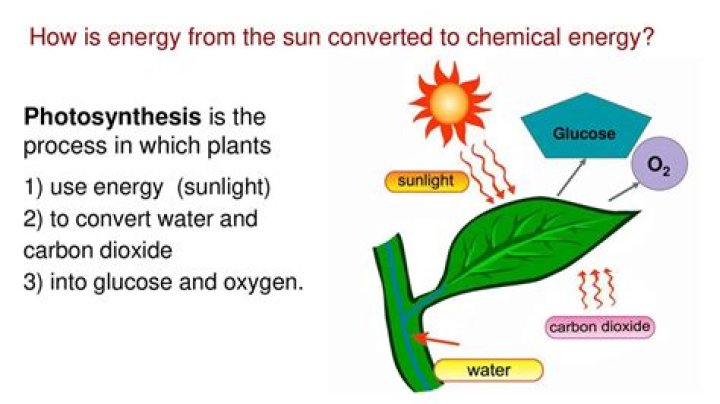
The electromagnetic energy of sunlight is converted to chemical energy in the chlorophyll-containing cells of photosynthetic organisms. Sunlight is converted to chemical energy in the form of ATP (adenosine triphosphate), which is the main energy-storing molecule in living organisms.Click to see full answer. Then, what form of energy is sunlight converted to in photosynthesis? chemical energy what happens to energy in sunlight during photosynthesis? During photosynthesis, plants trap light energy with their leaves. Plants use the energy of the sun to change water and carbon dioxide into a sugar called glucose. Glucose is used by plants for energy and to make other substances like cellulose and starch. In this manner, how is energy released in photosynthesis? Function. Photosynthesis uses light energy to convert carbon dioxide and water into glucose and oxygen gas. The potential energy stored in the molecular bonds of glucose becomes kinetic energy after cellular respiration that cells can use to do work like move muscles and run metabolic processes.Why is photosynthesis important?Photosynthesis is important to living organisms because it is the number one source of oxygen in the atmosphere. Green plants and trees use photosynthesis to make food from sunlight, carbon dioxide and water in the atmosphere: It is their primary source of energy.