John McEnroe: the BBC pays me more than women because they think I do a better job
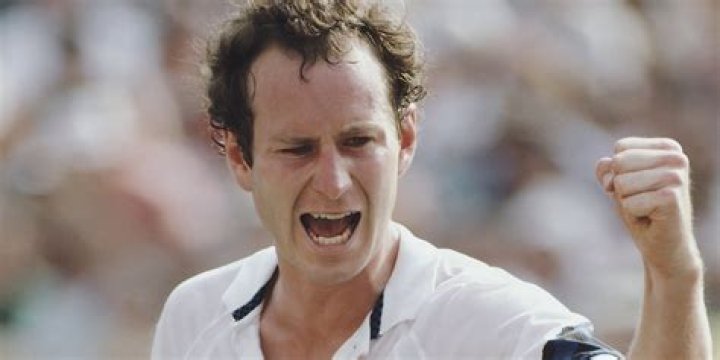
Another Wimbledon is almost upon us. Wimbledon starts on Monday, July 2nd. I’m really excited! The draws come out on Friday, just FYI, and it looks like Serena Williams will be seeded, which is a good move, in my opinion, for both Wimbledon and the US Open (the USO announced that they’ll be seeding former champions who took maternity leave too). Tennis conversations these days so often revolve around money, and who is being paid what and why.
Back in March, Martina Navratilova said in an interview that she had recently become aware of the fact that the BBC was paying John McEnroe ten times what they paid her for Wimbledon commentary. It’s true – in years past, the BBC paid Martina $15K- $20K, and they paid McEnroe $150K-$200K. Granted, they weren’t doing “the same” job – McEnroe was often scheduled to do commentary on the most high-profile men’s matches and a handful of high-profile women’s matches. Martina was and is used for more often for the lower-tier matches, the ones not on Center Court. Still, if we’re putting a value on commentary skills, Martina and John are the same, skill-wise. I would even put Martina ahead, because she’s so knowledgeable about so many players, male and female. She lives and breathes tennis, while McEnroe tends to only give a sh-t about the top guys. Anyway, McEnroe had some thoughts:
John McEnroe, the BBC commentator, has defended his Wimbledon pay package, which became the subject of a gender-equality row in March, by saying that he deserves his £150,000-plus remuneration. Speaking to reporters, McEnroe said: “It’s like if you work at a paper, and there’s a woman and a man, you’re going to get paid based on the job that you do in the opinion of the paper.”
In his latest comments on the issue, McEnroe declared himself supportive of the equal-pay principle. “If the girl does a better job, she should get more money,” he said, citing BBC presenter Sue Barker as one of his most admired colleagues. According to official figures, Barker earns more than £300,000 per year, which places her third on the list of BBC sports presenters behind Gary Lineker and Alan Shearer. “I believe that Sue does a very good job,” McEnroe said, “but don’t tell her that, because her head is already very big. She is juggling and has got people in her ear all the time, that’s already a lot tougher than what I do.”
Navratilova has since resolved her disagreements with BBC Sport. In a tweet posted on June 8, she said: “Very happy to announce I will be working at Wimbledon, it’s good to see the BBC taking gender pay equality seriously.”
When asked if he had discussed the issue with Navratilova, McEnroe replied: “I’ve not spoken to her. But we’re not in the same place that often, it doesn’t come up. I’ve been fortunate, that I have been working with the BBC for at least 15 years [actually, since 2000] and it has given me the opportunity to present myself in a different way. At least, people see me in a slightly different light than they saw me on the court, so I think it’s been mutually beneficial, hopefully.”
“You’re getting paid based on the job you do…” Except there’s no real way to quantify when a commentator is doing a “bad job” versus a “good job.” Personally, McEnroe’s commentary rarely adds much for me, while I always learn something from Martina’s commentary. How do you quantify that? And how much of this is simply dependent on who gets assigned commentary on which match by the BBC? It’s not about the job Martina is doing versus the job McEnroe is doing, it’s about how “popular” they are with the BBC brass, which is mostly just saying… of course the Tennis Boys Club prefers McEnroe to Martina. Ugh.
Photos courtesy of Getty, WENN.